CMA Intermediate Classes
Find the right faculty and build your understanding, one lesson at a time.
Explore classesFind your next class
16 classes





What students say
Reviews from CMA Intermediate learners on ClearLevel
CMA Intermediate 2026: Syllabus, Exam Pattern & Online Classes
CMA Intermediate is the stage that tests whether you are serious about becoming a Cost and Management Accountant. Eight papers across two groups-a pass rate of approximately 16.55% per attempt-and a syllabus that covers Cost Accounting, Financial Accounting, Taxation, Business Data Analytics, Securities Laws, and Management Accounting. The majority of candidates who appear do not clear.
CMA Intermediate 2026 — 8 Papers, Two Groups, June and December
Under the ICMAI Syllabus 2022, CMA Intermediate has eight papers split into two groups of four each. You can attempt both groups together or one at a time. The June 2026 and December 2026 sessions are the upcoming attempts. Every paper carries 100 marks with a 30:70 objective-to-descriptive split. You need 40% per paper and 50% aggregate per group to pass. Negative marking of 0.25 applies in the objective section.
Group 1 – Paper 5: Business Laws & Ethics
Group 1 – Paper 6: Financial Accounting
Group 1 – Paper 7: Direct & Indirect Taxation
Group 1 – Paper 8: Cost Accounting
Group 2 – Paper 9: Operations Management & Strategic Management
Group 2 – Paper 10: Corporate Accounting & Auditing
Group 2 – Paper 11: Financial Management & Business Data Analytics
Group 2 – Paper 12: Management Accounting
One mandatory requirement before appearing in both groups: students must complete the SAP Finance Power User Training under ICMAI's mandatory Skill Training Scheme 2026. This is non-negotiable-your exam form will not be accepted without it. Factor this into your preparation timeline.
Buy CMA Intermediate Classes — Paper by Paper
CMA Intermediate Business Laws and Ethics Classes
Paper 5 covers the Companies Act 2013 at an introductory CMA level, the Indian Contract Act, FEMA basics, the Competition Act, and Professional Ethics for CMAs under the Institute's code. Business Laws at CMA Intermediate is not a light paper-section-specific answers and correct citations earn marks that general explanations do not. Ethics questions are scenario-based and test application of ICMAI's code to professional situations, not common-sense reasoning. Our CMA Intermediate Business Laws classes build the statutory language fluency and scenario-application skill Paper 5 demands.
CMA Intermediate Financial Accounting Classes
Paper 6 covers financial statement preparation for companies under Ind AS, cash flow statements, accounting for share capital and debentures, partnership accounts at an advanced level, branch accounting, and an introduction to consolidated financial statements. For students coming from CMA Foundation Financial and Cost Accounting, the conceptual framework is familiar-but the depth of Ind AS application and the complexity of company accounts at Intermediate level is a significant step up.
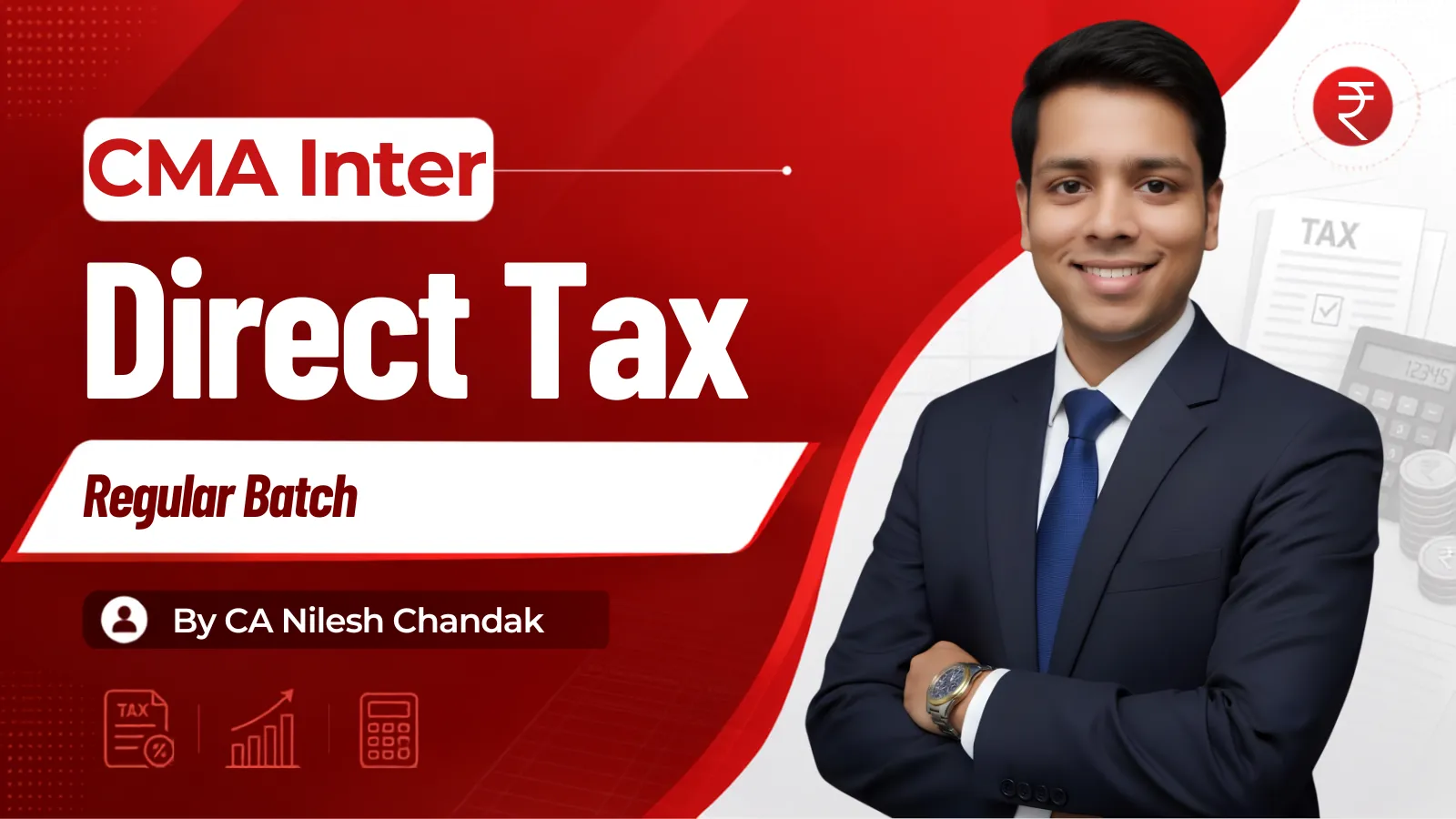
CMA Intermediate Direct and Indirect Taxation Classes
Paper 7 is the most amendment-sensitive paper in all of CMA Intermediate. The Direct Tax section-approximately 50 marks-covers Income Tax provisions updated for Finance Act 2026: heads of income, deductions, TDS, advance tax, and return filing. The Indirect Tax section-approximately 50 marks-covers GST: levy and collection, input tax credit, place of supply, valuation, returns, and assessment, updated for current GST Council notifications and CBIC circulars.
Our CMA Intermediate Taxation classes are verified as updated for Finance Act 2026 and current GST notifications before each exam session.
CMA Intermediate Cost Accounting Classes
Paper 8 is the paper that most directly defines the CMA qualification. Cost classification, material, labor, and overhead accounting, job costing, process costing, contract costing, marginal costing and break-even analysis, standard costing and variance analysis, and activity-based costing-all are tested through numerical problems and case-based scenarios. This is calculation-first content. Reading Cost Accounting without daily problem-solving does not prepare you for the exam. The descriptive section requires you to explain your working and conclusions-the marks are in the numbers, not the narrative.
CMA Intermediate Operations Management and Strategic Management Classes
Paper 9 covers operations management concepts-production planning, quality management, supply chain, project management using PERT/CPM-alongside strategic management frameworks including SWOT analysis, Porter's Five Forces, BCG Matrix, and competitive strategy. It is the most conceptual paper in Group 2 and the one that most rewards structured reading over rote memorization. The objective section tests specific frameworks and definitions with precision that general familiarity does not provide.
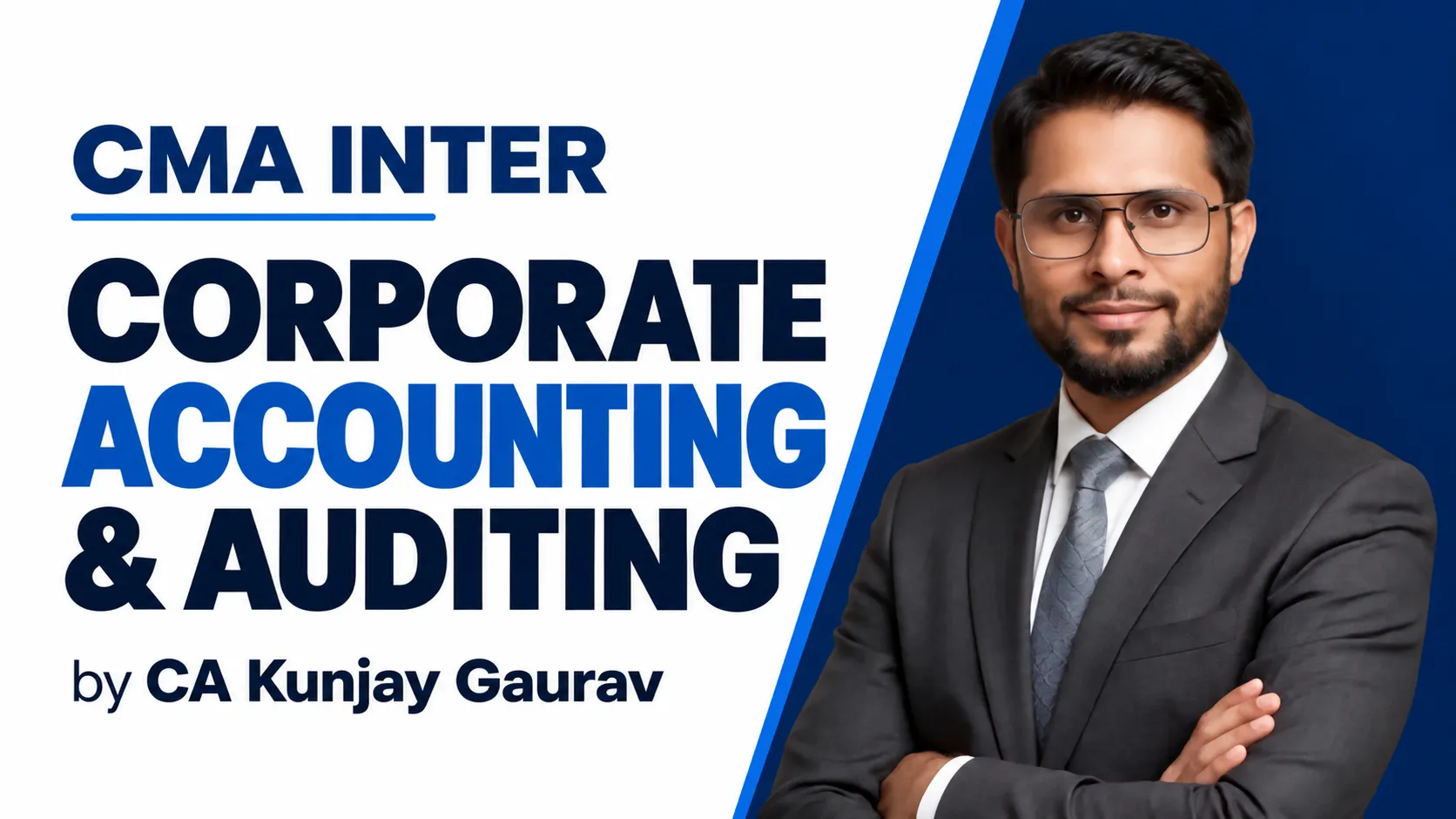
CMA Intermediate Corporate Accounting and Auditing Classes
Paper 10 covers corporate financial accounting-amalgamation and absorption of companies, valuation of goodwill and shares, financial statements of holding companies and subsidiaries- alongside auditing standards, internal audit, and company audit procedures. The corporate accounting sections build directly from CMA Foundation Financial and Cost Accounting and run parallel to the Ind AS content in Paper 6. The audit sections test Standards on Auditing application through scenario-based questions-the same failure pattern seen across all audit papers applies here: generic audit answers score poorly regardless of how much the student knows about auditing in general.
CMA Intermediate Financial Management and Business Data Analytics Classes
Paper 11 is one of the most significant additions in the ICMAI 2022 Syllabus. It combines Financial Management-capital budgeting, working capital management, cost of capital, capital structure, and dividend policy-with Business Data Analytics, covering data types, descriptive analytics, data visualization, analytical tools, and how data-driven insights support management decision-making.
The Business Data Analytics section is genuinely new content that did not appear in older CMA syllabi. Students who treat it as a minor appendix to Financial Management consistently lose marks in an area that is entirely learnable with focused preparation. Our CMA Intermediate FM and Business Data Analytics classes cover both sections with subject-specific depth-FM through numerical problem practice, and Business Data Analytics through concept-based teaching with MCQ application built in from the start.
CMA Intermediate Management Accounting Classes
Paper 12 covers budgeting and budgetary control, standard costing in a management context, responsibility accounting, transfer pricing, decision-making under uncertainty, and performance measurement. It takes the cost accounting framework from Paper 8 and applies it at a strategic management level-the question format shifts from pure calculation to analysis, interpretation, and recommendation. Students who are strong in Cost Accounting Paper 8 find the transition to Paper 12 manageable with focused study on the reporting and decision frameworks it adds.
Group Strategy — Together or One at a Time?
This is the most practical question at CMA Intermediate, and the answer depends entirely on your available preparation time. Attempting both groups together works when you have 9 to 12 months of structured preparation and can study 6 to 8 hours daily. Most students-particularly those in employment-do better splitting groups: Group 1 in June 2026, Group 2 in December 2026.
Why Buy CMA Intermediate Classes at ClearLevel?
ClearLevel brings together CMA Intermediate online classes from India's top faculty across all eight papers-so you choose the strongest available teacher for Cost Accounting independently from who teaches you Business Data Analytics or Taxation. Paper-wise buying at India's lowest price, verified for the ICMAI 2022 syllabus and Finance Act 2026 updates. No forced group bundles.
Also explore: CMA Foundation Classes | CA Intermediate Classes | All CMA Classes
Buy CMA Intermediate Courses Today
The June 2026 and December 2026 attempts are approaching. Taxation updates and Cost Accounting problem practice are the two preparation decisions that most directly determine results at this level. Both require starting early-not in the month before the exam.
ClearLevel gives you India's top CMA Intermediate faculty, paper by paper, at India's lowest price.
Frequently asked questions
Everything about CMA Intermediate classes on ClearLevel
Still have questions? Talk to a course counsellor